

Google Rating
Back to Blog
Dumpster Rental for Drywall, Debris & Construction Waste: Weight Limits Contractors Should Know Before Ordering
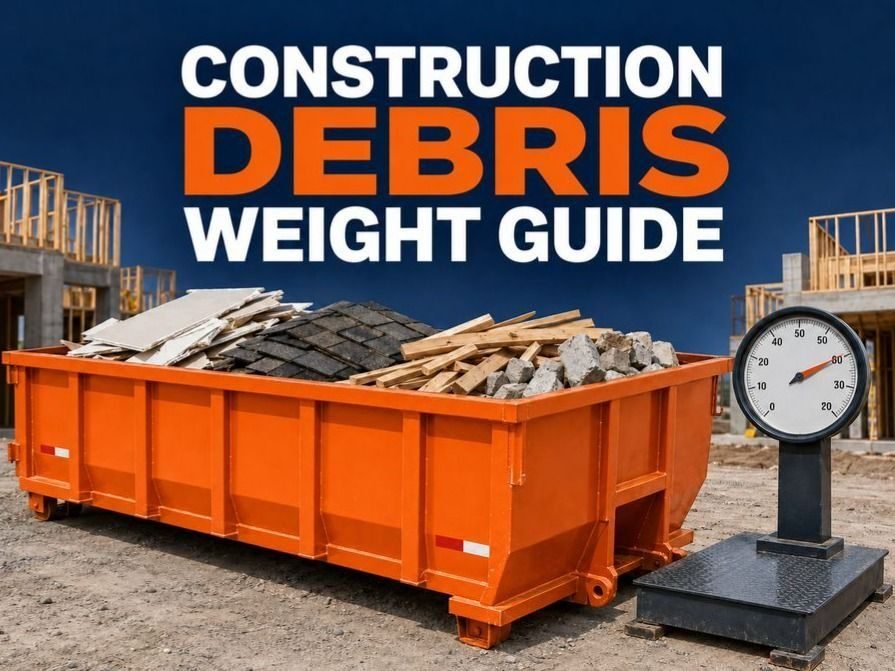
Choosing a construction dumpster based only on cubic-yard capacity can lead to an expensive surprise. A 20-yard container may have enough physical room for your debris, but that does not mean it can safely or affordably hold 20 cubic yards of every material.
For contractors, weight often matters more than volume. Drywall, roofing shingles, concrete, dirt, tile, and mixed demolition debris can use up a dumpster’s included weight allowance well before the container looks full. Once the load exceeds that allowance, additional disposal charges may apply.
Understanding the approximate weight of your construction debris before ordering can help you choose the right dumpster, estimate project costs more accurately, and avoid delays at pickup.
Dumpster Volume and Weight Are Not the Same
Dumpster sizes describe volume. A 15-yard dumpster provides approximately 15 cubic yards of space, while a 30-yard dumpster offers twice that volume. The size does not tell you how much weight is included with the rental or how much material can safely be transported.
Every dumpster rental has an included weight allowance based on factors such as:
-
Dumpster size
-
Type of debris
-
Disposal facility
-
Delivery location
-
Local hauling regulations
-
Container and truck capacity
The dumpster is weighed at the disposal facility after pickup. If the debris exceeds the included allowance, the additional weight is typically billed at the applicable per-ton rate.
This is why two contractors renting the same size dumpster can have very different disposal costs. A container filled with wood framing and packaging will weigh far less than the same container filled with tile, plaster, shingles, or concrete.
How Much Does a Dumpster Full of Construction Debris Weigh?
A dumpster filled with construction debris may weigh anywhere from a few tons to far beyond what a truck can safely haul. The actual weight depends on the material, moisture level, compaction, and amount of open space between pieces.
Approximate weights per cubic yard include:
-
Drywall: 500 to 750 pounds
-
Wood and lumber: 300 to 500 pounds
-
Mixed construction debris: 300 to 600 pounds
-
Asphalt shingles: 2,400 to 2,600 pounds
-
Brick: 2,500 to 3,500 pounds
-
Dirt: 2,000 to 3,000 pounds
-
Concrete and asphalt: 3,500 to 4,200 pounds
-
Sand: 3,000 to 3,200 pounds
These are planning estimates, not guaranteed disposal weights. Wet material, attached fasteners, plaster, mortar, tile, insulation, and other contaminants can significantly increase the final total.
Estimated Construction Debris Weight by Dumpster Size
The amount of weight a container can safely hold is not the same as its cubic-yard capacity. The following estimates show how heavy common construction materials could become if they occupied the full stated volume of a dumpster.
These figures are for illustration only. They do not mean a container can safely be filled to these weights.
15-Yard Dumpster
A full 15-yard dumpster could weigh approximately:
-
Drywall: 3.75 to 5.6 tons
-
Wood and lumber: 2.25 to 3.75 tons
-
Mixed construction debris: 2.25 to 4.5 tons
-
Asphalt shingles: 18 to 19.5 tons
-
Dirt: 15 to 22.5 tons
-
Concrete: 26.25 to 31.5 tons
20-Yard Dumpster
A full 20-yard dumpster could weigh approximately:
-
Drywall: 5 to 7.5 tons
-
Wood and lumber: 3 to 5 tons
-
Mixed construction debris: 3 to 6 tons
-
Asphalt shingles: 24 to 26 tons
-
Dirt: 20 to 30 tons
-
Concrete: 35 to 42 tons
30-Yard Dumpster
A full 30-yard dumpster could weigh approximately:
-
Drywall: 7.5 to 11.25 tons
-
Wood and lumber: 4.5 to 7.5 tons
-
Mixed construction debris: 4.5 to 9 tons
-
Asphalt shingles: 36 to 39 tons
-
Dirt: 30 to 45 tons
-
Concrete: 52.5 to 63 tons
These calculations show why contractors cannot treat cubic-yard capacity as permission to fill an entire container with dense material. Concrete, dirt, brick, shingles, and similar debris require special loading restrictions.
Next Day Dumpsters’ ordering guidelines restrict how high concrete and dirt can be loaded because of their weight. Always identify heavy debris when ordering so the team can confirm the correct container, permitted fill level, and disposal option.
How Much Does a Dumpster Full of Drywall Weigh?
Loose drywall generally weighs about 500 to 750 pounds per cubic yard. At that rate:
-
5 cubic yards: Approximately 1.25 to 1.9 tons
-
10 cubic yards: Approximately 2.5 to 3.75 tons
-
15 cubic yards: Approximately 3.75 to 5.6 tons
-
20 cubic yards: Approximately 5 to 7.5 tons
Those estimates can increase when the load contains wet drywall, dense plaster, metal studs, tile backer, insulation, screws, joint compound, or other demolition material.
Contractors should also consider how the drywall is loaded. Large broken sheets leave air pockets, while smaller fragments settle and compact into a denser load. Rain can add even more weight because gypsum and paper facing absorb moisture.
For a drywall removal project, estimate the total square footage and thickness before ordering. If the work includes plaster-and-lath walls rather than modern drywall, tell the rental provider. Plaster is substantially heavier and should not be estimated at the same rate.
Estimating Drywall Weight by Sheet
A sheet count can provide a more useful estimate when project plans are available. Approximate new-sheet weights include:
-
1/2-inch, 4-by-8 sheet: 40 to 60 pounds
-
5/8-inch, 4-by-8 sheet: 55 to 75 pounds
-
1/2-inch, 4-by-12 sheet: 60 to 90 pounds
-
5/8-inch, 4-by-12 sheet: 80 to 110 pounds
Removed drywall may weigh more because of joint compound, paint, fasteners, moisture, adhesive, or attached finish materials.
For example, 100 standard 4-by-8 sheets could represent roughly two to three tons before accounting for other debris. A multi-room demolition can therefore exceed an included weight allowance even when the dumpster still has visible space.
Roofing Debris Gets Heavy Quickly
Asphalt shingles are one of the most common causes of overweight construction dumpsters. Contractors typically estimate roofing debris by the square, with one roofing square covering 100 square feet.
Depending on the shingle type, age, number of layers, and moisture level, asphalt shingles may weigh approximately 250 to 400 pounds per square.
A single-layer tear-off could produce approximately:
-
15-square roof: 1.9 to 3 tons
-
20-square roof: 2.5 to 4 tons
-
25-square roof: 3.1 to 5 tons
-
30-square roof: 3.75 to 6 tons
-
40-square roof: 5 to 8 tons
Multiple layers can multiply the total. Underlayment, flashing, nails, rotten decking, and other roofing debris add even more weight.
Before ordering a roofing dumpster, confirm:
-
Total roof area in squares
-
Number of existing shingle layers
-
Type of roofing material
-
Whether decking will also be removed
-
Whether the shingles are wet
-
Whether the load will contain mixed debris
Slate, clay tile, and concrete tile require separate calculations and may need a dedicated heavy-material container.
Concrete, Brick, Dirt, and Tile Need Special Planning
Concrete, masonry, dirt, and tile are too dense to load like ordinary construction waste. Even a few cubic yards can weigh several tons.
Approximate examples include:
-
1 cubic yard of concrete: 1.75 to 2.1 tons
-
2 cubic yards of concrete: 3.5 to 4.2 tons
-
3 cubic yards of dirt: 3 to 4.5 tons
-
4 cubic yards of brick: 5 to 7 tons
-
5 cubic yards of sand: 7.5 to 8 tons
A container can reach its hauling limit while appearing mostly empty. Never assume a 20- or 30-yard dumpster can be filled to the top with concrete, dirt, brick, asphalt, or similar materials.
Heavy materials may also need to remain separate from other construction debris. Clean concrete can sometimes be handled differently from loads containing brick, dirt, rebar, wood, trash, or demolition waste. Describe the material accurately when ordering so the correct disposal category can be selected.
Mixed Construction Debris Can Be Difficult to Estimate
Mixed debris is common during remodels and demolition projects, but it can be harder to estimate than a load containing one material. A container may include lightweight lumber and insulation along with much heavier tile, plaster, cabinets, flooring, and fixtures.
The following materials can add substantial weight to a mixed load:
-
Ceramic or stone tile
-
Cement board and tile backer
-
Plaster and lath
-
Hardwood flooring
-
Cabinets and countertops
-
Plumbing fixtures
-
Masonry and mortar
-
Wet carpet or insulation
-
Roofing materials
-
Doors and windows
When describing the job, identify the heaviest material rather than focusing only on the material taking up the most space. A bathroom renovation may produce mostly bulky cabinetry and drywall, but the tile, mortar, cement board, tub, and fixtures could account for much of the load’s weight.
What Size Dumpster Is Best for Construction Waste?
The right dumpster depends on the type of debris as much as the size of the project.
15-Yard Dumpster
A 15-yard dumpster is often a practical choice for:
-
Small bathroom or kitchen demolition
-
Drywall from a limited renovation
-
Flooring and tile removal
-
Small roofing projects
-
Concrete, brick, or dirt projects approved in advance
-
Heavy debris loaded under specific restrictions
Its smaller capacity can help crews control extremely heavy loads, but contractors must still follow the required fill level.
20-Yard Dumpster
A 20-yard dumpster may work well for:
-
Medium remodeling projects
-
Multi-room drywall removal
-
Roofing tear-offs
-
Flooring replacement
-
Deck removal
-
Mixed construction waste
This size provides a useful balance between capacity and jobsite footprint. Weight should be monitored closely when the load includes shingles, tile, plaster, or masonry.
30-Yard Dumpster
A 30-yard dumpster is generally better suited to bulky materials and larger projects, including:
-
Whole-home renovations
-
New construction waste
-
Large quantities of wood and packaging
-
Siding and insulation
-
Commercial interior cleanouts
-
Bulky mixed demolition debris
The extra volume does not make a 30-yard dumpster the best choice for extremely dense material. Filling one with concrete, dirt, brick, or shingles could create an unsafe and potentially unserviceable load.
How Contractors Can Avoid Dumpster Overage Fees
A few calculations before delivery can make disposal costs much more predictable.
Identify the Primary Material
Tell the rental provider whether the load will contain drywall, shingles, concrete, dirt, lumber, tile, or mixed construction debris. Avoid using a general description such as “remodeling waste” when one heavy material will account for most of the weight.
Estimate Debris Before Demolition
Use measurements that fit the trade:
-
Drywall: Sheet count or square footage
-
Roofing: Squares and number of layers
-
Concrete: Slab length, width, and thickness
-
Dirt: Excavation length, width, and depth
-
Flooring: Square footage and material type
-
Masonry: Wall dimensions and material type
Providing these measurements helps the rental team estimate weight more accurately than a general description of the project.
Ask What Weight Is Included
The included allowance can vary by container, debris type, and service area. Confirm the included weight and the additional per-ton rate before placing the order.
An included weight allowance should not be confused with the maximum amount the dumpster can safely hold. The first affects the rental price, while the second affects whether the load can legally and safely be transported.
Keep Heavy Materials Separate
Mixing a small amount of household trash into a clean concrete load can change how the entire container is processed. Separate heavy debris when possible and ask what materials may be combined.
Dedicated loads may also make it easier to estimate the final weight. A container holding only drywall or shingles is generally more predictable than one filled with several types of demolition debris.
Account for Rain
Drywall, carpet, soil, wood, and other porous materials become heavier when wet. Monitor the weather and cover materials when appropriate and permitted. Do not allow water to accumulate inside the container.
Do Not Judge the Load by the Fill Line Alone
The fill line controls how high debris may be loaded. It does not guarantee the container is within its weight allowance.
A dumpster can remain below the top edge and still be overweight. This is especially common with concrete, dirt, tile, roofing shingles, plaster, and other dense materials.
Avoid Compacting Heavy Debris
Breaking and compacting debris can create more room, but it also allows additional weight to be added. A compacted load of drywall, tile, or shingles may become much heavier than the container appears.
Never use heavy equipment to force material into a dumpster unless the rental provider has approved the method and load type.
Order a Second Container When Necessary
For large projects, separating debris into two compliant loads may be safer and more cost-effective than creating one overweight container that cannot be hauled.
A second dumpster may also help keep recyclable or heavy material separate from general construction debris.
Why Accurate Material Information Matters
Dumpster providers depend on the information supplied during ordering to recommend the right container and calculate pricing. Describing a load as general construction waste when it is primarily concrete or shingles can lead to the wrong equipment, an unsafe load, and unexpected charges.
Before ordering, be ready to provide:
-
The project type
-
Primary debris material
-
Estimated amount of debris
-
Approximate weight, if known
-
Whether materials will be mixed
-
Presence of concrete, dirt, brick, tile, or shingles
-
Delivery and pickup schedule
-
Available placement area
Being specific helps both the contractor and the dumpster company plan for safe delivery, hauling, and disposal.
Get Clear Weight Guidance Before Your Dumpster Arrives
Construction debris varies too much for a one-size-fits-all weight estimate. The safest approach is to provide accurate information about the project before scheduling delivery.
Next Day Dumpsters works with small and midsize contractors on drywall removal, roofing, remodeling, demolition, landscaping, and other construction projects. Our knowledgeable team can explain available dumpster sizes, included weight allowances, material restrictions, and potential additional charges before you order.
Explore our dumpster rental options for contractors or contact Next Day Dumpsters with your project measurements and debris type. We will help you select a container that provides the space you need while accounting for the weight of the material being removed.
Recent News
Dumpster Rental Guide for Roofing Contractors Working Throughout Anne Arundel County
How HOA Rules Can Affect Dumpster Rentals in Ashburn, Leesburg & Reston

College Park & UMD-Area Move-Out and Apartment Cleanout Dumpster Rental Guide
5 Ways Our Online Portal Saves You Time on Your Next Project

Dumpster Rental Near Fort Belvoir: What Military Families Need to Know During a PCS Move
Dumpster Permits in Arlington, VA: What Homeowners Need to Know Before They Book